Transforming Digital Workspaces: The Power of Flat Color Vector Desk and Chair Illustrations
In the rapidly evolving landscape of digital design, the visual elements we choose to represent our ideas are just as critical as the ideas themselves. Among the most sought-after assets for modern web graphic design and animation are desk and chair flat color vector objects. These seemingly simple illustrations serve as the foundational building blocks for creating engaging workstation visuals, particularly for the booming home office sector. Whether you are a seasoned graphic designer, a content creator, or a business owner looking to enhance your brand's visual identity, understanding the utility and significance of these isolated cartoon illustrations is essential.
This article explores the world of flat design assets, specifically focusing on tables and ergonomic armchairs used to depict manager workplaces. We will delve into why these vectors are preferred over other formats, how they fit into contemporary work culture, and how utilizing a ZIP file containing EPS and JPG formats can streamline your creative workflow.
The Rise of Flat Design in Professional Imagery
To understand the value of a desk and chair flat color vector object, one must first appreciate the shift toward flat design. For years, digital interfaces were dominated by skeuomorphism—designs that mimicked real-life textures like wood grain, leather, and metallic shadows. While realistic, these designs often cluttered screens and slowed down loading times. Flat design emerged as a solution, stripping away unnecessary details to focus on usability, speed, and clarity.
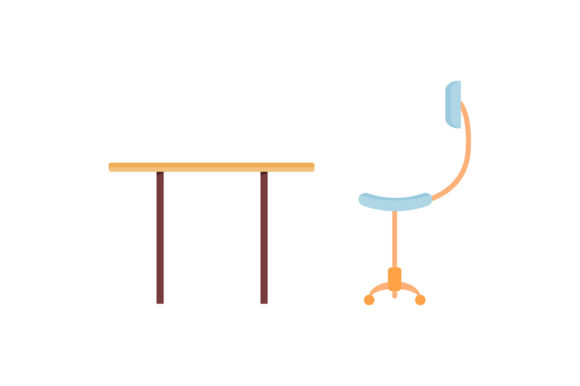
A flat color vector illustration uses solid colors and clean lines without gradients, shadows, or three-dimensional effects. When applied to office furniture, such as a manager workplace setup, this style creates a clean, modern aesthetic that communicates professionalism without visual noise. It allows the viewer to instantly recognize the object—a desk, a chair, a computer—without being distracted by hyper-realistic details. This clarity is paramount in web graphic design, where users scan pages quickly and need immediate context.
Why Vectors Are Superior for Web and Animation
The term "vector" refers to a specific type of digital image format. Unlike raster images (such as standard photos) which are made of pixels and can become blurry when enlarged, vectors are based on mathematical paths. This means a desk and chair flat color vector object can be scaled up to the size of a billboard or down to the size of a mobile app icon without losing any quality. This scalability is the primary reason designers prefer vectors for responsive web design.
Furthermore, vectors are incredibly lightweight. In an era where website loading speed is a crucial factor for SEO and user retention, using optimized vector graphics ensures that your site remains fast. When these objects are prepared as isolated cartoon illustrations, they come with transparent backgrounds, making them easy to layer over any colored background or integrate into complex scenes without awkward white boxes surrounding them.
For animators, these files are a goldmine. Because every element in a vector file (like the legs of the table or the cushion of the chair) is on a separate layer or path, it can be manipulated individually. This allows for smooth animations where a character might sit down, the chair might compress slightly, or items on the desk might move. This level of interactivity brings static web pages to life, enhancing user engagement.
Reflecting Modern Work Culture: The Home Office Revolution
The subject matter of these illustrations—specifically the workstation for home office—is not arbitrary. It reflects a profound shift in how society works. The traditional cubicle has largely been replaced by the flexible, personalized home workspace. Consequently, stock imagery and custom graphics needed to evolve to match this new reality.
When businesses use illustrations of a table and ergonomic armchair, they are tapping into a universal experience. Remote workers, freelancers, and corporate managers alike spend their days at similar setups. By using relatable imagery, companies can build a stronger emotional connection with their audience. An illustration of a tidy, well-equipped home desk suggests productivity, comfort, and balance—values that many modern employees strive for.
Moreover, the inclusion of an ergonomic armchair in these designs highlights a growing awareness of health and wellness in the workplace. It signals that the brand cares about the physical well-being of its users or employees. This subtle visual cue can be powerful in marketing materials for HR software, furniture companies, or productivity apps.
Practical Applications Across Industries
The versatility of desk and chair flat color vector objects extends far beyond simple decoration. Here are several ways these assets are utilized in the real world:
- Web Graphic Design: These objects serve as heroes on landing pages, icons for service lists, or background elements to add depth to a website without overwhelming the text.
- E-Learning and Education: Educational platforms use these illustrations to create scenarios. For example, a module on "Setting Up Your Study Space" can feature a step-by-step guide using these clear, isolated components.
- Corporate Presentations: Instead of boring bullet points, presenters use these graphics to visualize organizational structures or workflow processes involving management roles.
- Mobile App Interfaces: Due to their scalability, these vectors are perfect for app icons and in-app illustrations that need to look crisp on high-resolution smartphone screens.
- Animation and Video Content: Explainer videos often rely on character rigs interacting with furniture. Having pre-made, clean vector desks and chairs speeds up the production process significantly.
Understanding File Formats: EPS and JPG
When you acquire a set of these illustrations, they typically come in a ZIP file containing multiple formats, most commonly EPS and JPG. Understanding the difference between these two is vital for using the assets effectively.
The EPS (Encapsulated PostScript) file is the raw vector source. This is the file you want to open in professional design software like Adobe Illustrator, CorelDRAW, or Inkscape. Inside the EPS file, you will find the editable paths. You can change the color of the chair from blue to red, resize the desk to fit a specific layout, or separate the monitor from the table. This format offers maximum flexibility and is essential for professional customization.
On the other hand, the JPG (Joint Photographic Experts Group) file is a rasterized version of the illustration. It is a flat image that cannot be easily edited or scaled up without losing quality. However, JPGs are universally compatible. You can drop a JPG directly into a Word document, a PowerPoint slide, or a basic website builder without needing specialized software. Including both formats in a single package ensures that the asset is useful for both professional designers and general users.
Common Misconceptions About Stock Illustrations
There is a lingering assumption that using stock illustrations, such as a manager workplace isolated cartoon illustration, results in generic or unoriginal content. While it is true that overused clips can make a brand feel stale, the key lies in customization. Because these are vector files, no two designers have to use them in the same way. By altering color palettes to match brand guidelines, combining different elements to create unique scenes, or adding custom textures, creators can transform a standard asset into something wholly original.
Another misunderstanding is that flat design is "too simple" to convey complex emotions. In reality, the simplicity of flat design forces the creator to focus on composition and color theory, which are powerful tools for storytelling. A well-chosen color scheme for a home office illustration can evoke feelings of calm, energy, or creativity more effectively than a cluttered, photorealistic image.
Building a Broader Visual Strategy
Incorporating desk and chair flat color vector objects into your projects is more than just a aesthetic choice; it is a strategic decision. It aligns your visual content with modern design trends, ensures technical performance across devices, and resonates with the current cultural zeitgeist of flexible work environments.
For beginners, starting with these pre-made assets lowers the barrier to entry. You do not need to be an expert illustrator to create professional-looking graphics. You simply need to understand how to assemble, recolor, and position these elements. For experienced designers, these vectors serve as time-saving foundations upon which complex, bespoke artworks can be built.
Ultimately, the goal of using these tools is to communicate clearly. Whether you are explaining a business concept, teaching a skill, or selling a product, the clarity provided by a well-designed table and ergonomic armchair illustration helps your audience focus on your message. As digital media continues to dominate our daily lives, the demand for clean, scalable, and meaningful visuals will only grow. Embracing these flat color vector objects is a step toward creating content that is not only visually appealing but also functionally superior.
By leveraging the power of these assets, found conveniently in ZIP files with EPS and JPG options, creators can ensure their work stands out in a crowded digital space. The next time you embark on a web design project or an animation task, consider the humble desk and chair. They may just be the missing piece that ties your entire visual narrative together.