Building a Brand Identity: The Strategic Role of Real Estate Logos in Property Marketing
In the competitive landscape of property sales, development, and management, visual identity serves as the first point of contact between a business and its potential clients. Real estate is distinct from many other industries because it deals simultaneously with high-value financial transactions and deeply personal life decisions. Whether an individual is purchasing a family home, leasing commercial space, or investing in a new development, the level of trust required is substantial. Consequently, the tools used to convey professionalism, stability, and creativity—specifically branding assets like logos—play a critical role in establishing that trust before a single conversation takes place.
A well-crafted logo for the real estate sector does more than just display a company name; it encapsulates the essence of the brand's approach to housing, construction, and agency services. When evaluating branding options, professionals often weigh the benefits of custom-designed vector graphics against pre-made templates or generic icons. Understanding the nuances of these choices helps agencies, studios, and corporate businesses make informed decisions about their visual representation.
The Distinct Nature of Real Estate Branding
Real estate branding differs significantly from retail or e-commerce branding due to the longevity and emotional weight of the product. While an online shop selling clothing might prioritize trendiness and rapid turnover, a real estate agency or construction firm must project endurance and reliability. The logo acts as a seal of quality on contracts, signage, digital listings, and marketing materials.
This distinction influences the design requirements. A logo intended for this sector often incorporates elements symbolizing structure, such as buildings, rooftops, or abstract geometric shapes that suggest stability. However, modern trends also favor minimalist approaches that work well across various media, from large billboard advertisements to small mobile app icons. The versatility of the design is paramount because the real estate industry operates across both physical and digital realms.
Evaluating Vector Formats vs. Raster Images
One of the most critical technical decisions in acquiring or creating a logo is choosing the correct file format. For serious business applications, vector formats are superior to raster images. Vector graphics, typically found in files like Adobe Illustrator (AI, EPS, SVG), are mathematically defined paths rather than grids of pixels. This fundamental difference offers several advantages:
- Scalability: A vector logo can be resized from the size of a business card to the side of a skyscraper without any loss of quality or pixelation. This is essential for real estate firms that need consistent branding on everything from yard signs to corporate headquarters.
- Editability: Vector files allow for easy customization of colors, shapes, and text. If a company rebrands or needs a monochrome version for faxed documents or embossed stationery, a vector file makes this adjustment seamless.
- File Efficiency: Despite their scalability, vector files often remain lightweight, ensuring fast loading times on websites and e-commerce platforms dedicated to property listings.
In contrast, raster formats like standard JPEGs or PNGs are resolution-dependent. Enlarging them often results in blurry edges, which can undermine the professional image a firm tries to project. While raster images are useful for web previews, the master file for any serious branding effort should always be a vector source file, such as those compatible with Adobe Illustrator CC, CS, or CorelDraw.
Comparing Multipurpose Templates to Custom Design
Business owners often face a choice between commissioning a completely custom logo from scratch or utilizing a high-quality, multipurpose template. Both approaches have valid use cases depending on the budget, timeline, and specific needs of the business.
Custom Design offers total uniqueness. It ensures that no other entity shares the same visual identity, which is crucial for large corporations or luxury brands aiming for exclusivity. However, this route requires significant time for consultation, iteration, and higher financial investment.
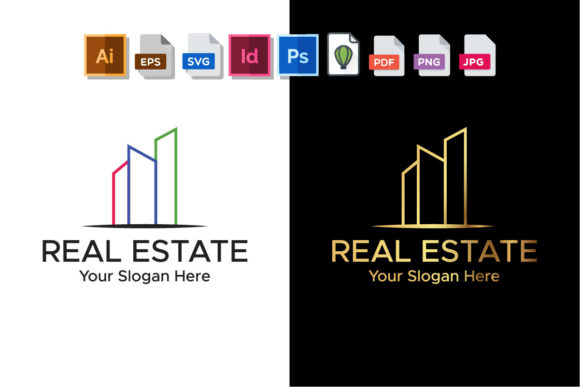
Multipurpose Templates, particularly those that are fully layered and editable, offer a pragmatic alternative. These resources often come with comprehensive file support, including Adobe InDesign, Photoshop PSD, and PDF formats. They are ideal for:
- Startups and New Agencies: Entities needing to launch quickly with a professional look while managing initial capital.
- Satellite Offices: Large franchises that need localized branding that adheres to corporate guidelines but requires specific text changes.
- Diversified Portfolios: Investors who manage multiple properties or shopping malls and need a cohesive yet adaptable visual system.
The key to successfully using a template lies in its flexibility. A robust template will include multiple color variations (such as CMYK for print and RGB for digital), free font links, and fully separated layers. This allows the user to modify the icon, adjust the typography, and swap colors to align with their specific market positioning without starting from zero.
Application Across Different Business Models
The utility of a strong real estate logo extends beyond traditional brokerages. The structural and aesthetic elements found in these designs are highly adaptable for various related industries. Understanding where these logos fit best helps in selecting the right style.
Construction and Development: Firms in this sector benefit from logos that emphasize strength and engineering precision. Bold lines and solid colors often resonate well here, projecting the capability to handle large-scale building projects.
E-commerce and Online Shops: With the rise of digital property marketplaces, logos must function effectively as favicons and app icons. Simplicity is key. A design that relies on intricate details may fail when shrunk down to a mobile screen size. Vector formats ensure clarity at any dimension.
Corporate and Studio Environments: Interior design studios, architectural firms, and corporate real estate departments often prefer sophisticated, minimalist logos. These designs serve as a watermark on blueprints, presentations, and portfolio websites, adding a layer of polish to technical documents.
Decision Factors: When to Choose Specific Features
When evaluating a logo resource or design brief, several factors should guide the decision-making process. These considerations ensure the final asset supports long-term business goals rather than just serving an immediate aesthetic need.
Color Mode and Print Readiness
Professional printing requires specific color profiles. Designs intended for physical marketing materials—such as brochures, banners, and signage—must utilize CMYK color modes to ensure accurate color reproduction. Digital-only assets rely on RGB. High-quality logo packages typically provide both, or at least the CMYK source files, allowing for seamless transitions between online listings and offline open house events. Ignoring this distinction can lead to costly reprinting errors where colors appear dull or shifted.
Typography and Legibility
The font choice within a logo conveys tone. Serif fonts often suggest tradition and established history, suitable for legacy agencies. Sans-serif fonts imply modernity and efficiency, fitting for tech-driven property platforms. Regardless of the style, the text must be legible. A good logo package includes free font links or uses standard typefaces that are easy to license and install, ensuring consistency across all team members' devices.
Layer Organization and Editability
For non-designers or those working with external printers, the organization of the source file is vital. A "fully layered" file means that every element—the icon, the company name, the tagline, and the background—is on a separate layer. This structure allows for easy isolation of elements. For instance, if a real estate agent needs to place the logo over a photograph of a property, they can easily remove the background or adjust the opacity of specific layers in software like Adobe Photoshop or Illustrator.
Limitations and Considerations
While versatile logo templates and vector assets offer immense value, they are not a panacea for all branding challenges. Users must recognize certain limitations. A multipurpose logo, by definition, is designed to appeal to a broad audience. This means it may lack the hyper-specific narrative that a bespoke, story-driven brand identity possesses. For ultra-luxury markets where exclusivity is the primary selling point, a unique, custom-created symbol may still be the necessary investment to differentiate from competitors using similar stock resources.
Furthermore, the ease of editing can be a double-edged sword. Without a basic understanding of design principles, users might inadvertently compromise the balance of the logo by changing colors to clashing combinations or distorting proportions. It is advisable to adhere to the original design's intent regarding spacing and color harmony, using the editable features for necessary adaptations rather than complete overhauls.
Making the Right Choice for Your Venture
Selecting the appropriate branding assets for a real estate venture involves balancing cost, time, and the desired level of uniqueness. For many businesses, particularly those in the early stages or those managing diverse portfolios like shopping malls and residential complexes, a high-quality, fully editable vector logo provides the optimal balance. It offers the professional polish of a custom design with the flexibility and affordability of a template.
By prioritizing technical standards such as vector scalability, CMYK compatibility, and layered organization, businesses ensure their brand remains robust across all mediums. Whether the goal is to establish a trusted local agency, launch an online property shop, or represent a large construction firm, the right visual foundation enables clear communication and fosters the trust necessary to close deals in the dynamic world of real estate.